Open Ballot
About
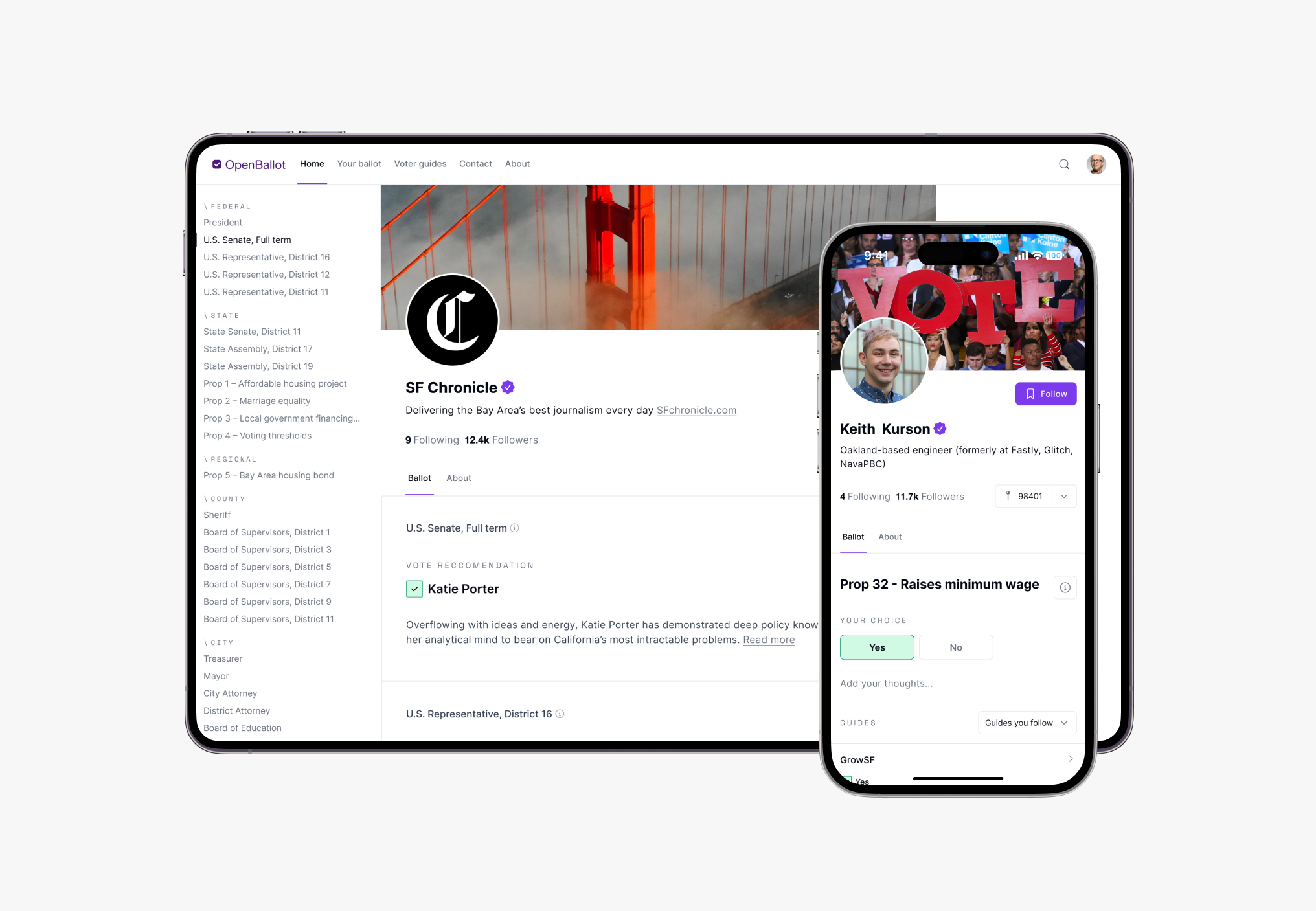
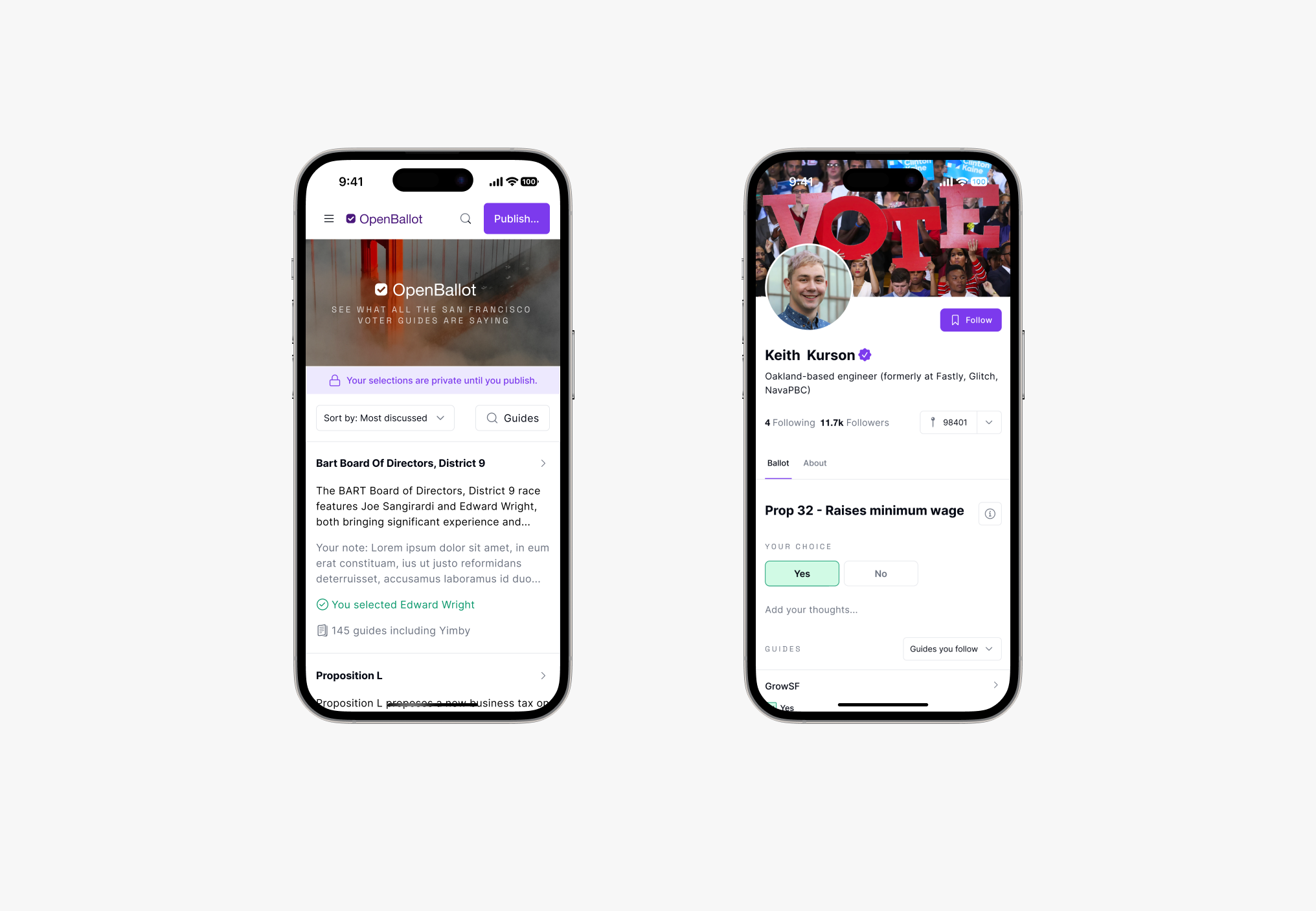
OpenBallot is a non-partisan platform, incubated by the Plurality Institute, that turns scattered voter guides into a single, transparent interface.
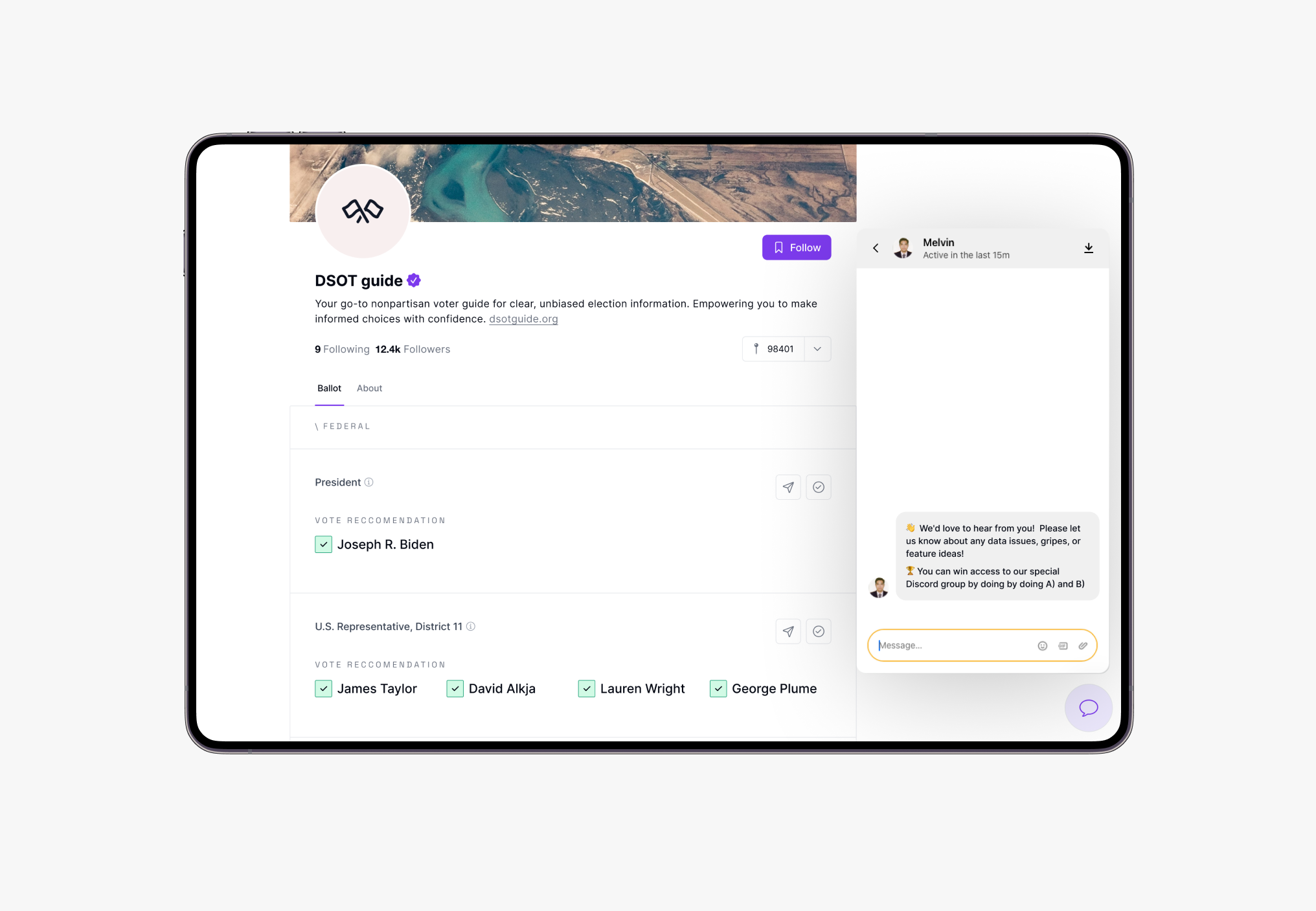
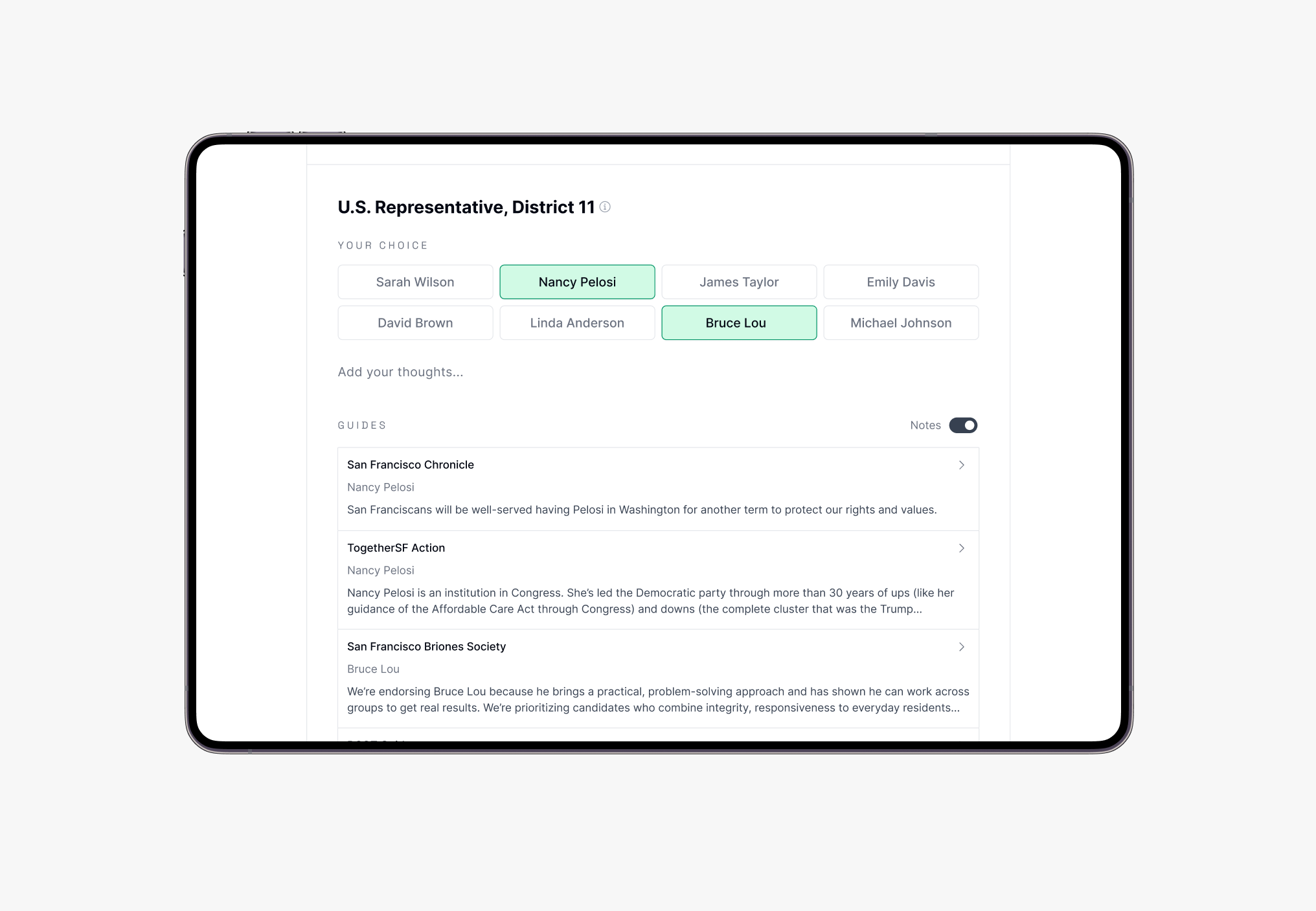
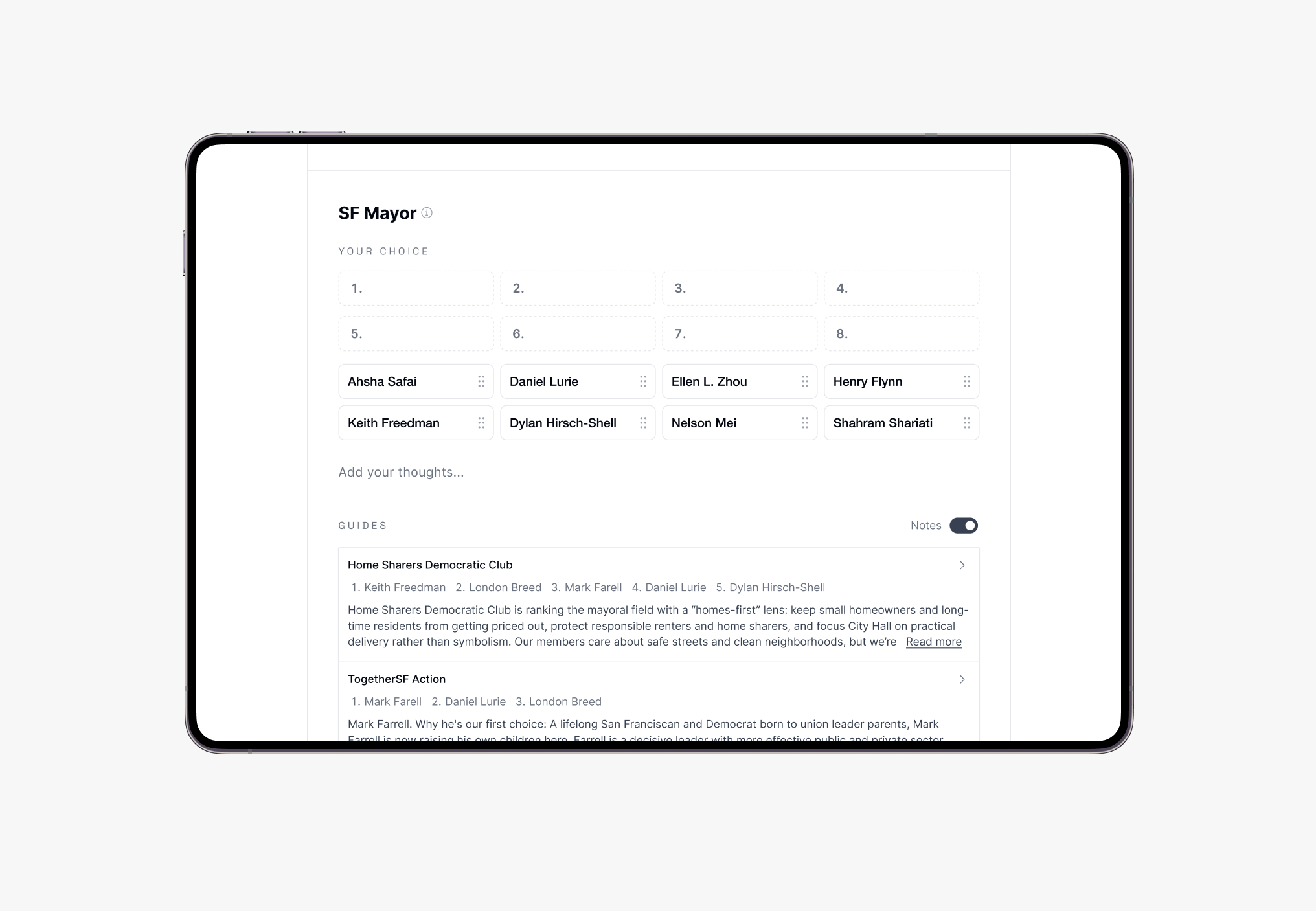
Newspapers, advocacy groups, political clubs, and informed individuals already publish thoughtful recommendations, but they’re fragmented and hard to compare, especially on long, complex ballots with different voting methods (from simple yes/no propositions to multi-candidate and ranked-choice races). OpenBallot aggregates those guides so voters can follow trusted sources, see side-by-side recommendations on every race, and complete their ballot quickly with a values-aligned, well-informed vote.
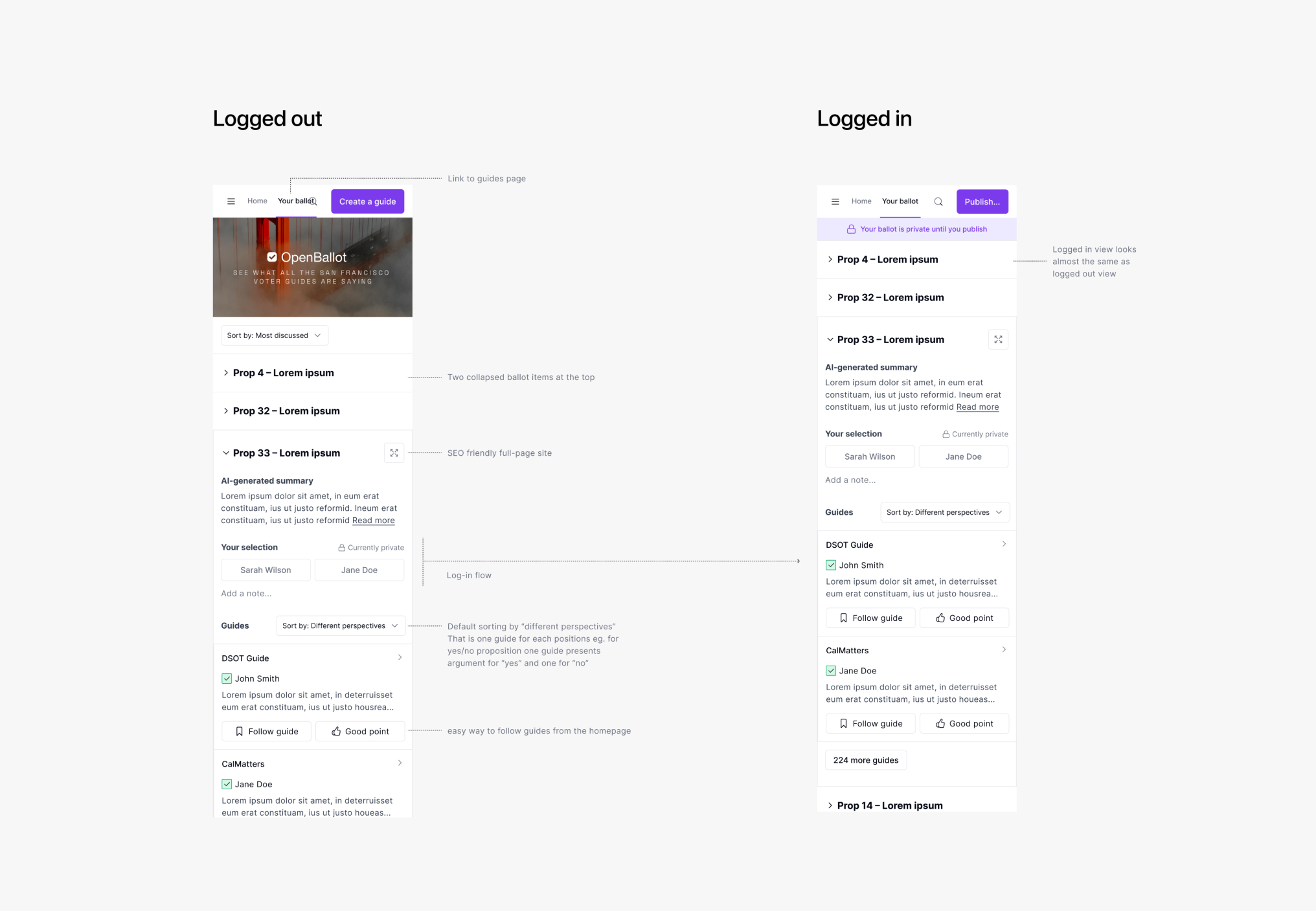
I worked as the lead UI/UX and product designer, responsible for the core voter and guide-creator experiences. My focus was to distill a very complex information space—multiple races, conflicting guides, different voting methods, and different levels of detail—into an interface that feels intuitive, calm, and fast. I designed and iterated on interaction patterns that let users move smoothly from a full ballot overview down to a single contested race, without losing context.
In collaboration with the founders and engineers, I translated product and user research insights into concrete design decisions, helped shape the product narrative (including proposing the “OpenBallot” name), and maintained a consistent visual and interaction language across the app. This work contributed to a system that has already been used in multiple live elections including San Francisco primaries, recalls, and generals, a New York City primary, and a California special election and is evolving into durable civic infrastructure rather than just another campaign tool.
Date
Created in 2025
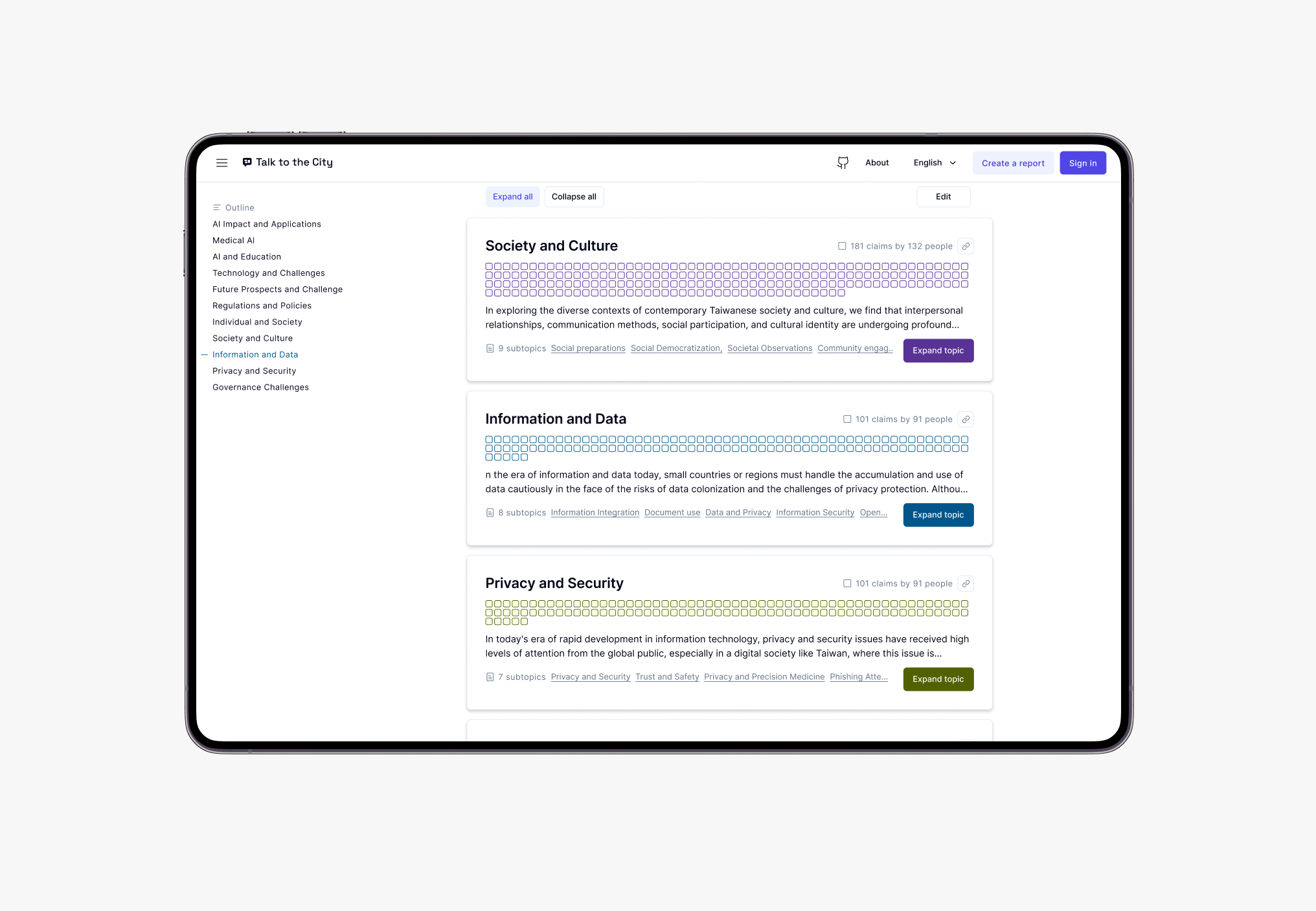
Talk to the City
About
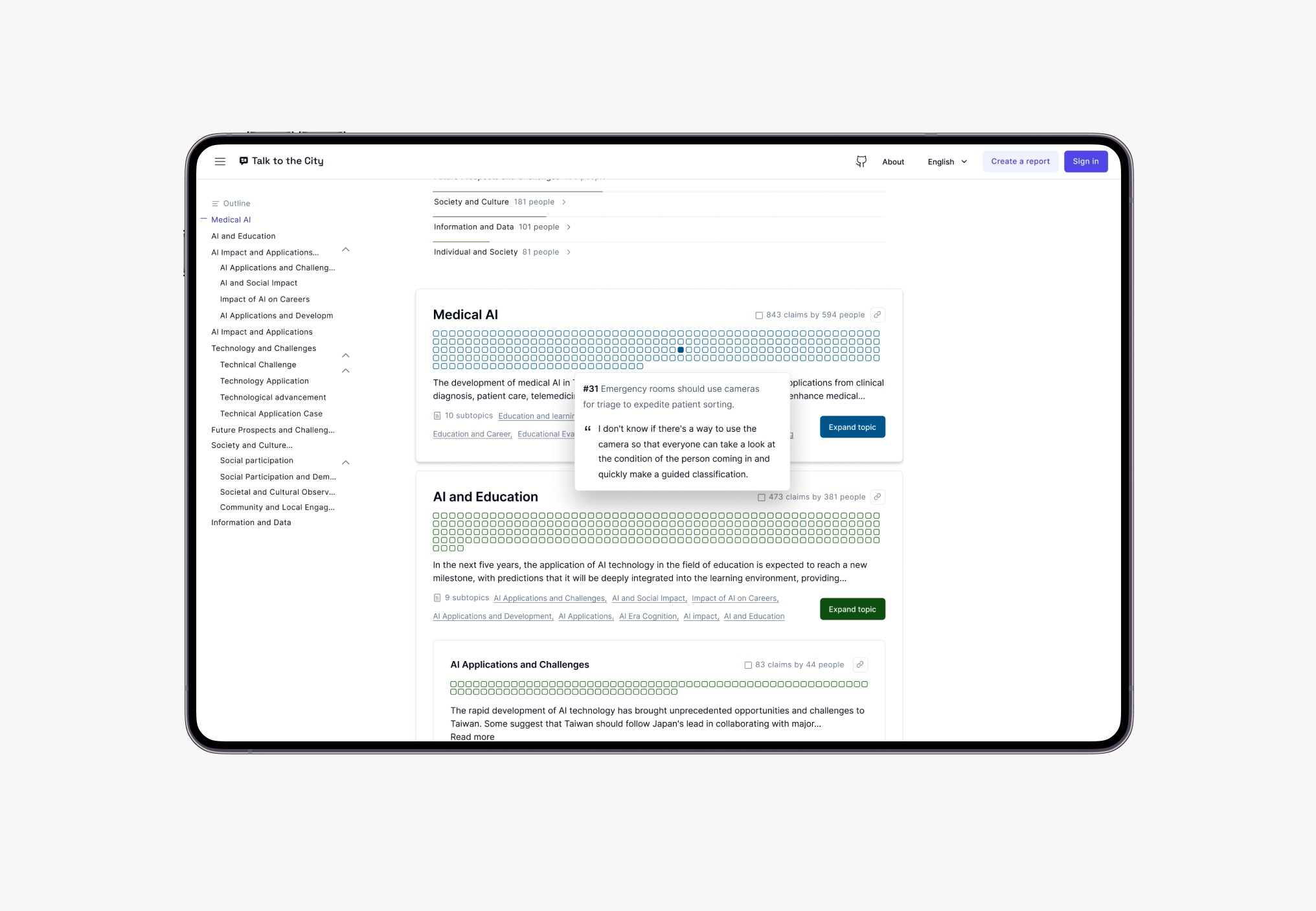
Talk to the City is an open-source AI tool that distills insights from large-scale public input developed by AI Objectives Institute. It helps large groups of people coordinate by understanding each other better, faster, and in more depth.
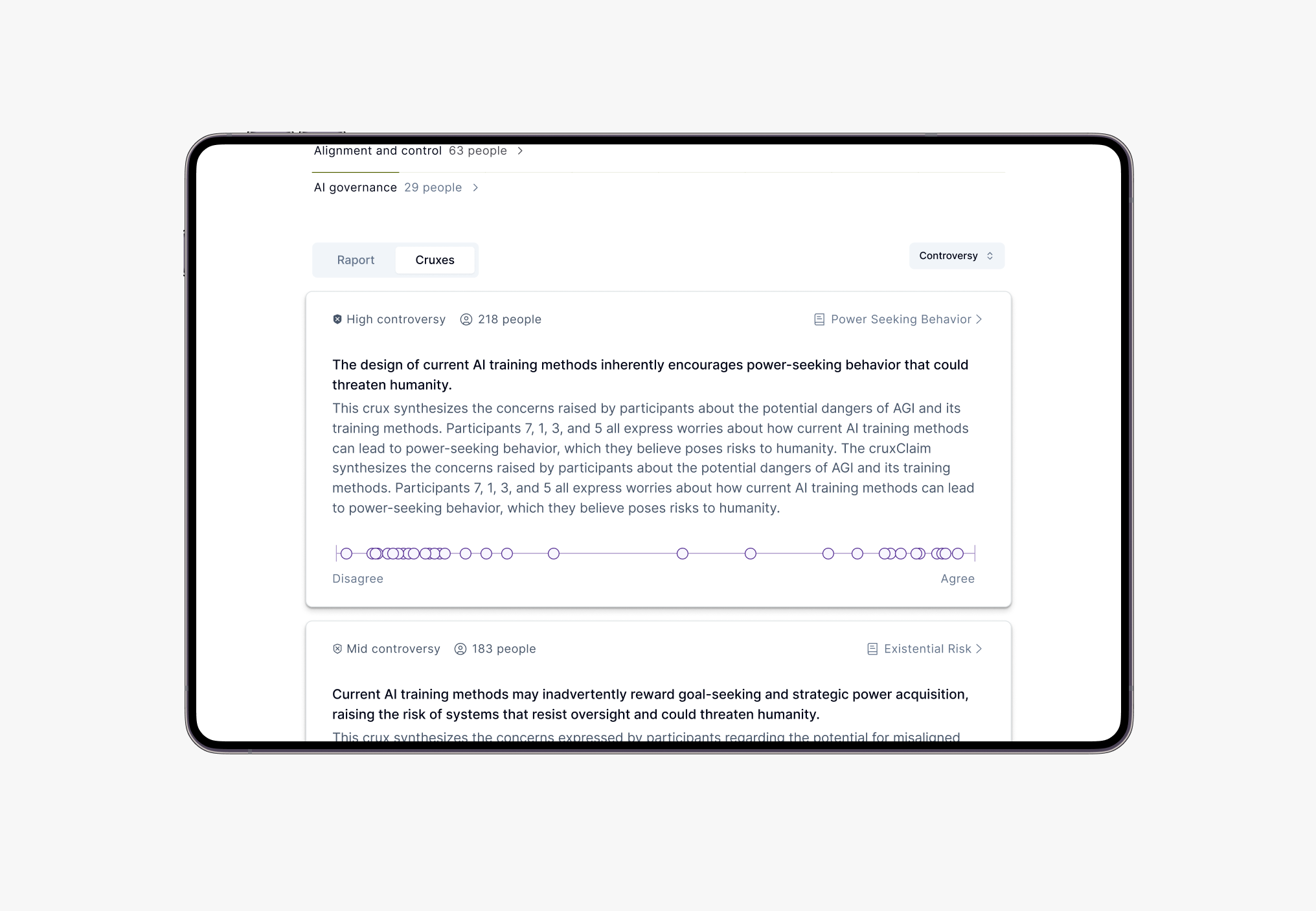
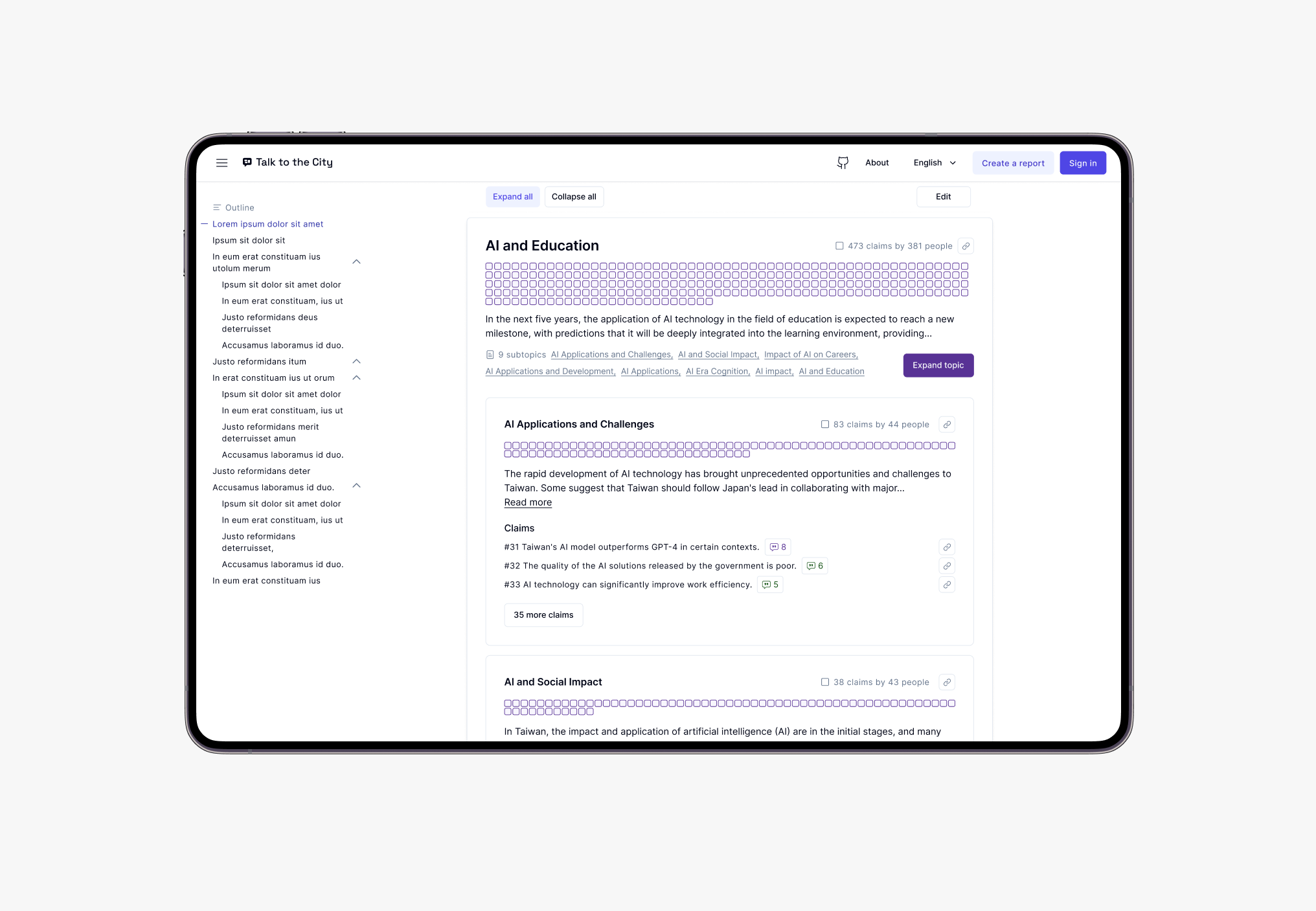
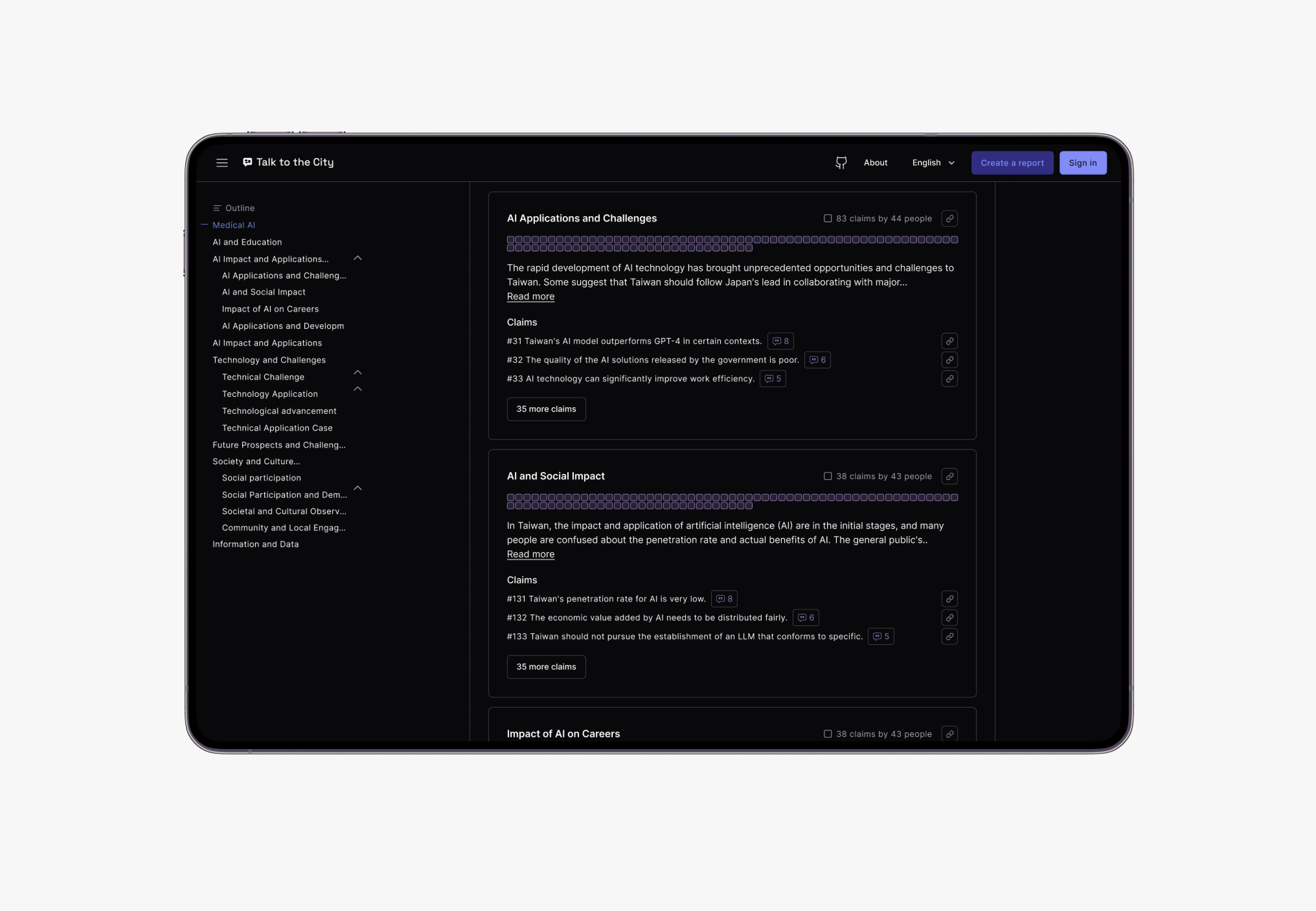
It uses Large Language Models to analyze broad themes from large datasets of free-text responses, summarize specific claims, and link those claims back to exact quotes. The result is an interactive report that combines all scales of analysis.
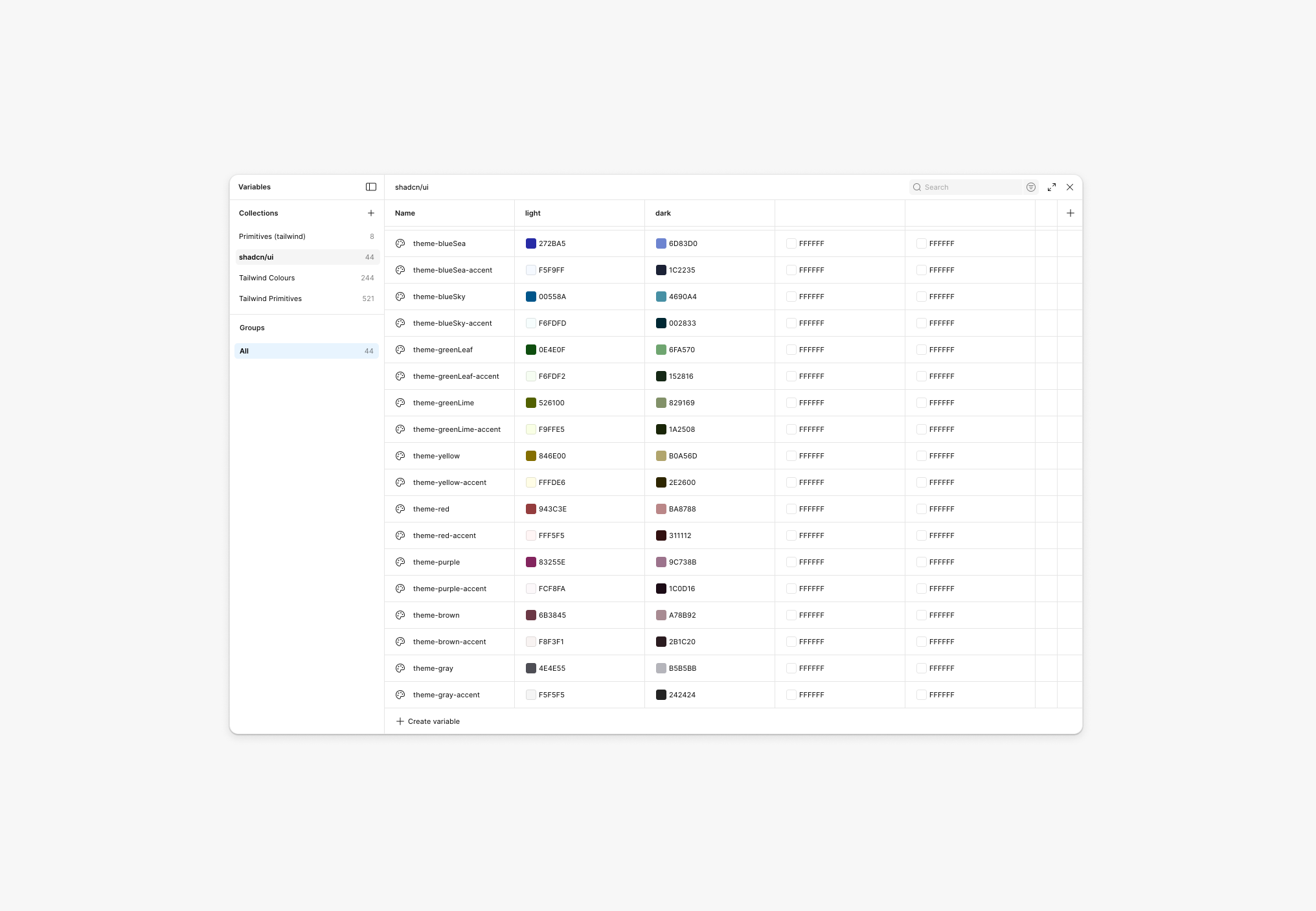
I drove the platform's comprehensive redesign, including information architecture, design systems, visual identity, and interaction patterns.I collaborated with engineers to refine the LLM pipeline that extracts and clusters arguments from participant responses.Through user research with civic organizations and government partners, I iteratively improved the interface to make complex deliberation data accessible to non-technical users.
The tool has been deployed at national scale with Taiwan's Ministry of Digital Affairs and has processed input from over 10,000 participants across 100+ organizations. Beyond the core platform, I researched and prototyped experimental tools for collective coordination, including Discourse Mapper, Crux Dialogue, and Agent Parliament.
Date
Created in 2025